- A multicenter study - a study that is carried out in a large number of specialized clinical centers;
- Randomized - a study in which patients are randomly assigned to groups;
- Double-blind, placebo-controlled – a study in which neither the study physician nor the patient knows whether the patient is receiving the study drug or a placebo.

MIR study in hemispheric
ischemic stroke
The drug Mexidol® demonstrated a high degree of efficacy and safety in an international multicenter, randomized, double-blind, placebo-controlled study evaluating the efficacy and safety of sequential therapy with ethylmethylhydroxypyridine succinate in patients in the acute and early recovery periods of ischemic stroke (IHS), which was carried out according to GCP (Good Clinical Practice) standards [1].

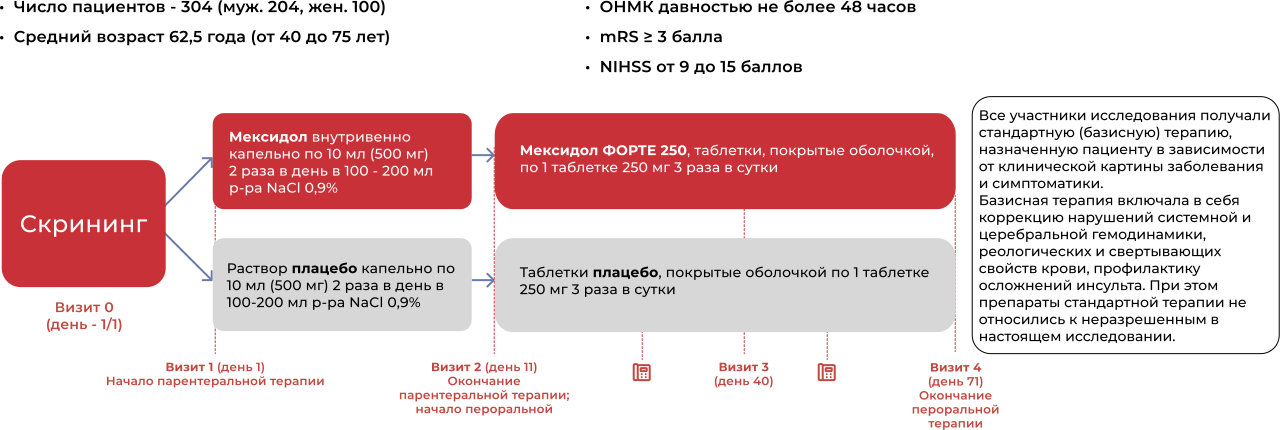
Research design
A total of 304 patients (ITT population) aged 40 to 75 years were randomized in the study. The study groups did not differ in gender, age, height, body weight, or BMI. According to the study protocol, the PP population was the main one for evaluating the efficacy; it included 279 randomized patients: 141 in the main group and 138 in the placebo group. The PP population for calculating some secondary efficacy endpoints was 276 patients due to the fact that the methodology of these scales does not provide for the assessment of mortality.
Patients in the 1st group received sequential therapy: Mexidol® for 10 days, 500 mg twice daily intravenously by drip, followed by taking Mexidol FORTE 250 tablets, 1 tablet (250 mg) 3 times a day for 60 days, patients in the 2nd group received placebo according to a similar scheme. The duration of the course of treatment with Mexidol® and Mexidol FORTE 250 was 70 (10+60) days.
A prospective, multicenter, randomized, double-blind, comparative study in parallel groups
-
The study scheme included 5 control stages of examination and two phone calls to observed patients:
- Visit 1 (1st day of research),
- Visit 2 (Day 11, completion of injection course, start of oral therapy),
- Visit 3 (day 40),
- Visit 4 (study day 71, completion of oral therapy),
- Active telephone calls (televisits) to patients were made between the 2nd and 3rd, 3rd and 4th visits.
Efficiency criteria
The primary efficacy criterion was the magnitude of change in the patient's condition assessment results (Δ) using the modified Rankin Scale (mRS) (which allows for the assessment of the degree of disability, independence, and rehabilitation outcomes) at the end of therapy relative to the baseline level.
When analyzing secondary efficacy criteria, the results of testing on scales at the end of the parenteral stage and the entire course of therapy were taken as a basis:
- Δ on the mRS scale at the end of the parenteral course of therapy relative to the baseline level;
- The proportion of disabled patients (3 points or more on the mRS scale) at the end of the parenteral course of therapy;
- The proportion of disabled patients (3 points or more on the mRS scale) at the end of therapy;
- The proportion of patients with a score of 0–1 on the mRS scale at the end of the parenteral course of therapy;
- The proportion of patients with a score of 0–1 on the mRS scale at the end of therapy;
- Δ on the NIHSS scale at the end of the parenteral course of therapy relative to the baseline level;
- Δ according to the National Institutes of Health Symptoms Scale (NIHSS) (characterizes the severity of neurological deficit) at the end of therapy relative to the baseline level;
- Δ according to the Rivermead mobility index at the end of the parenteral course of therapy;
- Δ according to the Rivermead Mobility Index (assesses the mobility indicators of patients after a stroke) at the end of therapy relative to the baseline level;
- Δ on the MoCA scale at the end of the parenteral course of therapy relative to the baseline level;
- Δ on the MoCA scale at the end of therapy relative to the baseline level;
- Δ on the HADS scale at the end of the parenteral course of therapy relative to the baseline level;
- Δ on the anxiety and depression scale (HADS) at the end of therapy relative to the baseline level.
Treatment safety: safety and tolerability were assessed throughout the study (from the moment of the first administration of the study drug/placebo) based on physical examination data; general clinical and biochemical blood tests, coagulogram, general urine analysis, ECG, frequency and severity of adverse events.
Results
Long-term sequential therapy with Mexidol and Mexidol FORTE 250 helps to reduce limitations in life activities and the degree of disability in patients compared to placebo.
The magnitude of change in the patient's condition assessment results (∆) on the mRS scale at the end of therapy relative to the baseline (Visit 4)
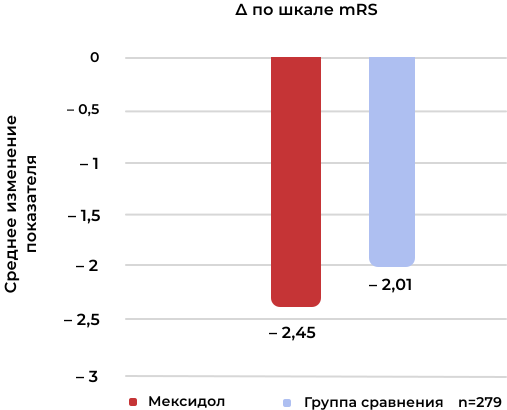
When analyzing the results for the primary efficacy criterion, it was found that the Mexidol therapy group showed a statistically significant improvement in life activity and a reduction in disease symptoms and functional impairment compared to placebo.
The average change in the indicator by the end of therapy in the Mexidol group was –2.45 (95% CI –2.698 to –2.323) points, and in the placebo group –2.01 (95% CI –2.246 to –1.869) points.
The difference between the groups was -0.432 (p=0.003), which confirmed the superiority in the effectiveness of therapy using drugs
Mexidol+ Mexidol FORTE 250 over placebo in terms of Δ on the mRS scale at the end of the study by patients.
Mexidol is 21% superior to placebo in reducing life activity limitations and the degree of disability.
Long-term sequential therapy with Mexidol and Mexidol FORTE 250 helps reduce the risk of severe disability in patients compared to placebo.
One of the secondary efficacy criteria was the proportion of disabled patients (3 points or more on the mRS scale at the end of therapy.
The proportion of disabled patients (3 points or more on the mRS scale) at the end of therapy
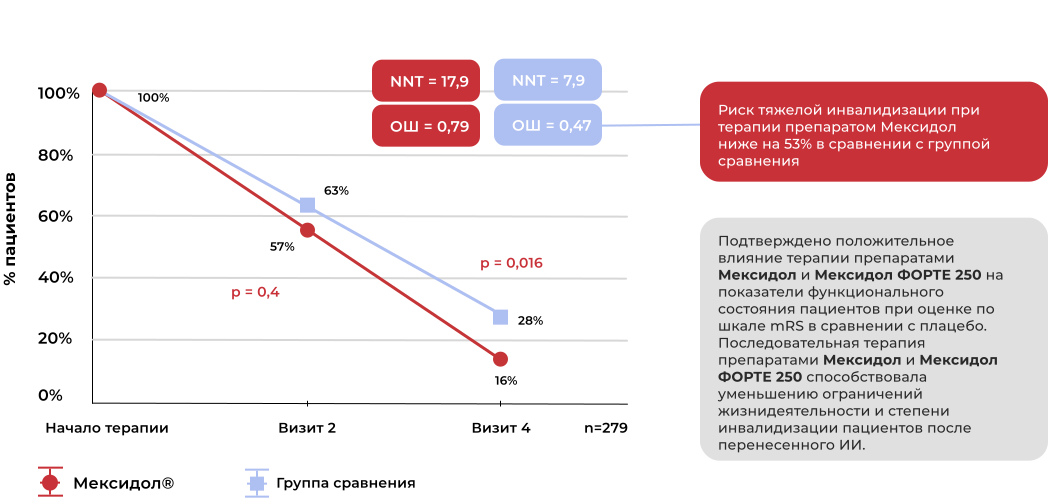
At visit 2, the number of disabled patients was 81 (57%) in the main group and 87 (63%) in the placebo group (p=0.4), while by visit 4 the number of disabled patients decreased in the main group to 22 (16%) and in the placebo group to 39 (28%) (p=0.016).
The differences identified at visit 4 were also confirmed by the NNT values for disability, which at visits 2 and 4 were 17.9 and 7.9, respectively, and the OR was 0.79 and 0.47, respectively.
The risk of severe disability during therapy with Mexidol is 53% lower compared to the comparison group.
Note:
NNT (Number Needed to Treat) shows the average number of patients who need to be treated to prevent one adverse outcome or achieve one favorable outcome compared to the control group. The ideal NNT value is 1, which means the treatment is absolutely effective (every patient benefits), and the higher the NNT, the less effective the treatment. An NNT in the range of 5 to 15 indicates a positive impact of the treatment on human health.
The odds ratio (OR) is the ratio of the occurrence of an event in one group to the chances of its occurrence in the other group; odds were defined as the ratio of the probability of an event to the probability of its absence. If OR > 1, this indicates a positive association; if OR < 1, a negative association; if OR = 1, there is no association.
The probability of absence of disability with long-term sequential therapy with Mexidol and Mexidol FORTE 250 compared to placebo increases by 2.2 times.
The proportion of patients with a score of 0-1 on the mRS scale at 69-73 days
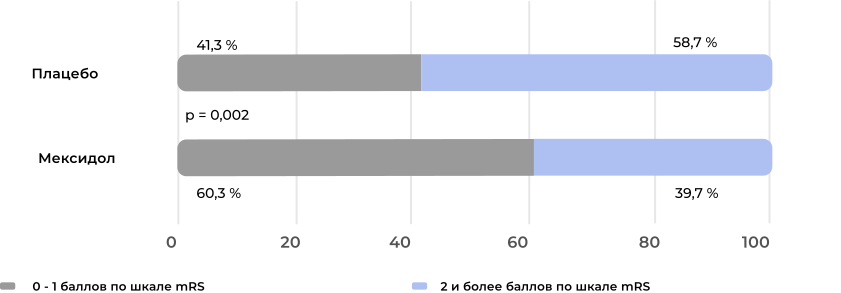
In clinical practice, information on the frequency of favorable functional outcomes of IS at the end of follow-up (MSR score 0–1) is extremely important. In the study group, the proportion of such cases was 60.3% (n = 85), while in the placebo group it was only 41.3% (n = 57). The differences between the groups were statistically significant (p = 0.002).
Post hoc calculation of the OR showed that administration of the study drug was associated with a 2.2-fold increase in the odds of a favorable outcome compared with placebo (OR 2.157, 95% CI 1.337–3.479, p < 0.001).
In addition, the NNT value was calculated to be 5.3, indicating that when the drug is prescribed to patients with an initial NIHSS score of 9–15 points, approximately one in five of them can achieve a high degree of functional independence (0–1 point on the MRS) by days 69–73.
Long-term sequential therapy with Mexidol and Mexidol FORTE 250 helps to reduce the proportion of patients with a significant degree of disability and significantly increase the proportion of patients with no limitations in life activities.
Proportion of patients with different degrees of functional impairment (according to mRS)
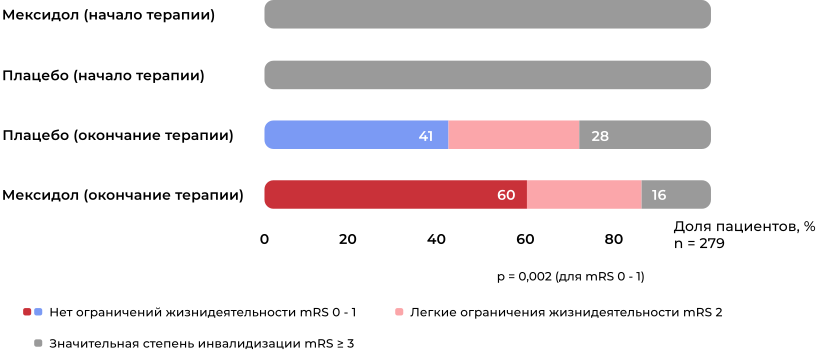
Distribution of the proportions of disabled and self-care capable patients (≥3 and 0-1 points on the mRs scale, respectively) at the beginning of therapy and after the end of a long-term sequential therapy course with Mexidol and Mexidol FORTE 250.
Long-term sequential therapy with Mexidol and Mexidol FORTE 250 helps to significantly reduce the proportion of patients with hemispheric ischemic stroke compared to placebo.
At the screening visit, the number of patients with moderate or moderate IS (5–15 points on the NIHSS scale) was 143 (100%) in the main group and 140 (100%) in the placebo group.
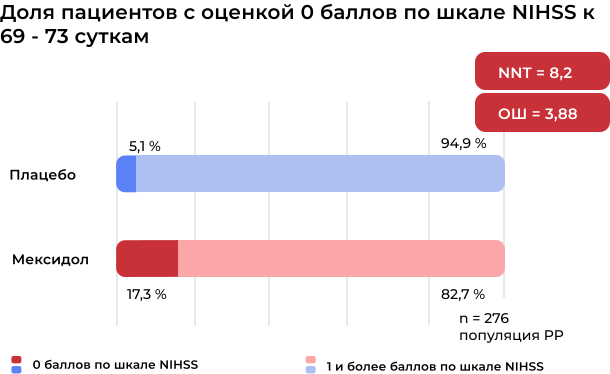
By the end of therapy, the number of patients with a score of 5–15 on the NIHSS scale was 20 (14.2%) in the study group and 38 (28%) in the placebo group (statistically significant differences). At Visit 4, the number of patients who had no clinical signs of stroke (0 on the NIHSS scale) was 24 (17%) in the study group and 7 (5.1%) in the placebo group (statistically significant differences).
Long-term sequential therapy with Mexidol and Mexidol FORTE 250 significantly increases the proportion of patients without residual neurological deficit compared to placebo
The proportion of patients with a score of 0 points on the NIHSS scale at 69–73 days
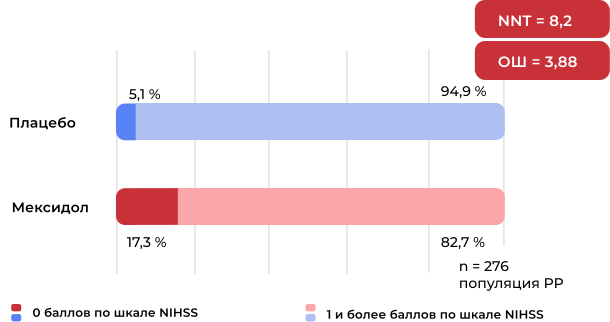
An additional post-hoc analysis showed that with sequential therapy in the main group, the chance of absence of residual neurological deficit by days 69–73 increased by 3.9 times compared to placebo (OR 3.876, 95% CI 1.610–9.331, p = 0.001).
The NNT indicator was 8.2, which corresponds to a complete regression of neurological symptoms according to the NIHSS scale against the background of sequential therapy by 69–73 days in approximately every eighth patient with an initially moderate and moderate degree of neurological deficit.
The results of the study on the NIHSS scale allow us to conclude that the use of Mexidol in combination with standard therapy in the acute and early recovery periods of ischemic stroke can significantly reduce the severity of neurological deficit in these patients.
Note:
NNT (Number Needed to Treat) shows the average number of patients who need to be treated to prevent one adverse outcome or achieve one favorable outcome compared to the control group. The ideal NNT value is 1, which means the treatment is absolutely effective (every patient benefits), and the higher the NNT, the less effective the treatment. An NNT in the range of 5 to 15 indicates a positive impact of the treatment on human health.
The odds ratio (OR) is the ratio of the occurrence of an event in one group to the chances of its occurrence in the other group; odds were defined as the ratio of the probability of an event to the probability of its absence. If OR > 1, this indicates a positive association; if OR < 1, a negative association; if OR = 1, there is no association.
Long-term sequential therapy with Mexidol and Mexidol FORTE 250 contributes to a significant increase in activity and mobility in patients compared to placebo.
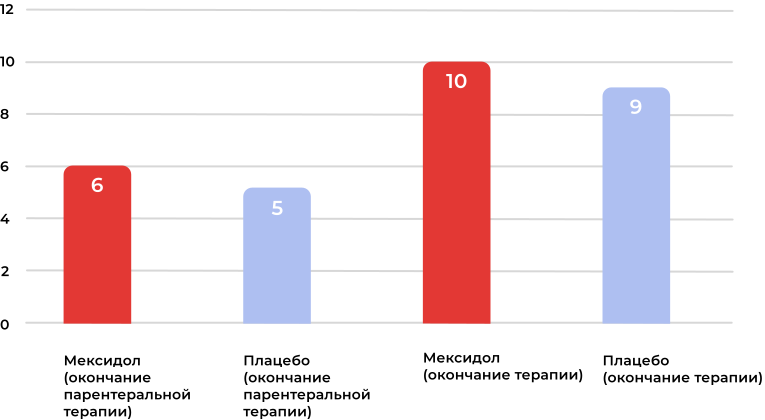
Median change in Rivermead Index scores
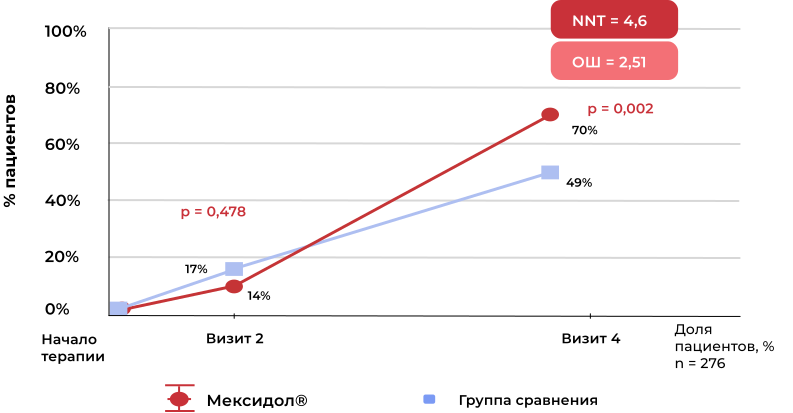
Number of patients without mobility impairment (Rivermead Index score of 14 or more)
The median increase in the Rivermead index score at the end of parenteral therapy compared with the baseline level was 6 points in the main group and 5 in the placebo group (p=0.3), and after completion of the full course of therapy – 10 and 9 points, respectively (p=0.014).
At visit 2, the number of patients who had no mobility impairments (14 points or more on the Rivermead Mobility Index) was 20 (14.2%) in the main group and 24 (17.4%) in the placebo group (p=0.478), and at visit 4, a score of 14 points or more on the Rivermead Mobility Index was present in 99 (70.2%) patients receiving Mexidol and in 68 (49.3%) patients receiving placebo (p=0.002).
For achieving a Rivermead Mobility Index score of 14 or more at Visit 4, the NNT was 4.6 and the OR for achieving this endpoint was 2.51 (95% CI 1.53–4.15; p=0.002).
The use of Mexidol and Mexidol FORTE 250 in complex sequential therapy for ischemic stroke ensures the restoration of key functions and increased motor activity and independence of the patient after completion of therapy.
Long-term sequential therapy with Mexidol and Mexidol FORTE 250 helps improve cognitive functions in patients in the acute and early recovery periods of ischemic stroke.
Median change in MoCA scores
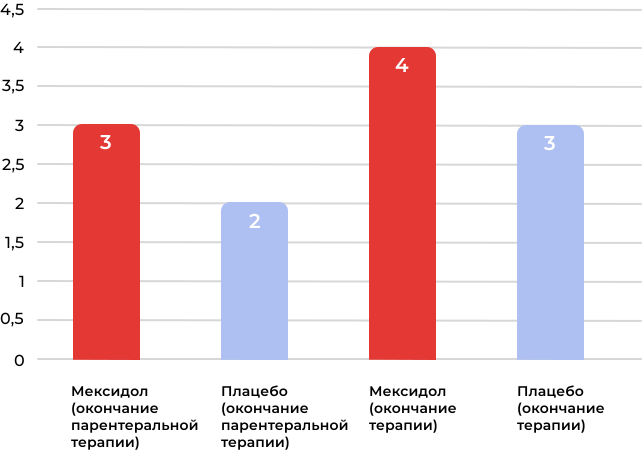
Median changes in the MoCA score at the end of parenteral therapy compared with the baseline level were 3 points in the main group and 2 points in the placebo group (p=0.2), and after completion of the full course of therapy – 4 and 3 points, respectively (p=0.052).
The results demonstrated a trend toward superiority of Mexidol and Mexidol FORTE 250 therapy over placebo in patients with ischemic stroke. Consequently, sequential therapy with Mexidol and Mexidol FORTE 250 positively impacts cognitive functioning in patients who have suffered ischemic stroke.
Long-term sequential therapy with Mexidol and Mexidol FORTE 250 demonstrates safety profiles similar to those of placebo.
Data on reported adverse events
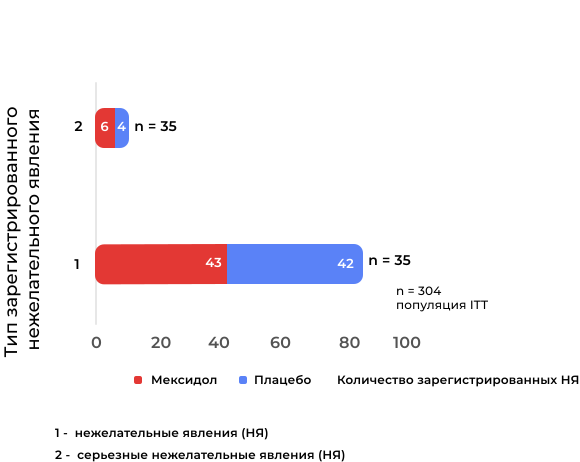
In this study, 85 adverse events (AEs) were recorded, including 10 serious AEs (SAEs) (6 (60%) SAEs in the main group and 4 (40%) in the placebo group). AEs were identified in 35 (23%) patients in the main group (a total of 42 AEs) and 35 (23%) in the placebo group (a total of 43 AEs).
Differences in the incidence of AEs between the drugs were statistically insignificant (p=1.000). The relative risk of AEs in the main and placebo groups was 1.00 (95% CI for relative risk: 0.66; 1.51), indicating no statistically significant differences between the compared groups for this indicator. No statistical differences were observed in severity, severity criterion, relationship with the study drug, predictability, actions taken, outcomes, or relative risk of AEs in the study groups. Most AEs were mild (16 (38%) AEs in the main and 18 (42%) in the placebo group) or moderate (21 (50%) in the main and 24 (56%) in the placebo group) in severity.
In addition, the study demonstrated good compatibility of long-term sequential therapy with Mexidol and Mexidol FORTE 250 with background therapy drugs (similar to placebo).
The use of Mexidol in cerebral infarction (ischemic stroke) reliably reduces the degree of neurological deficit and improves the recovery of neurological functions, as well as improves functional outcome and reduces disability.
Conclusions
A prospective, international, multicenter, randomized, double-blind, placebo-controlled study demonstrated the superiority of long-term sequential therapy with Mexidol solution for intravenous and intramuscular administration, 50 mg/ml, and Mexidol FORTE 250 film-coated tablets, 250 mg, compared to placebo in patients in the acute and early recovery periods of stroke (IS).
Long-term sequential therapy with Mexidol and Mexidol FORTE 250 in the acute and early recovery periods of ischemic stroke, in addition to standard therapy, reduces impairment of vital functions and the severity of neurological symptoms, reduces the degree of disability, and increases the level of patient mobility.
The proven superiority of the effectiveness of long-term sequential therapy with Mexidol and Mexidol FORTE 250 has been demonstrated in relation to the following clinical indicators:
- reduction of life activity limitations and the degree of disability of patients (primary endpoint according to the mRs scale);
- reduction in the risk of severe disability and the probability of absence of disability (according to the mRS scale);
- a decrease in the proportion of patients with a significant degree of disability and a significant increase in the proportion of patients with no limitations in life activities (according to the mRS scale);
- significant reduction in the severity of neurological deficit (according to the NIHSS scale);
- significant increase in activity and mobility (as measured by the Rivermead Mobility Index);
- positive impact on the level of cognitive functioning (according to the MoCA scale).
List of literature
- Shamalov N.A., Fedin A.I., Rakhimbaeva G.S., Nurguzhaev E.S., Khasanova D.R., Solovieva E.Yu., Melnikova E.V., Yanishevsky S.N., Mashin V.V., Pizova N.V., Poverennova I.E., Chuprina S.E., Agafyina A.S., Roshkovskaya L.V. Results of an international multicenter, randomized, double-blind, placebo-controlled study assessing the efficacy and safety of sequential therapy with ethylmethylhydroxypyridine succinate in patients in the acute and early recovery periods of ischemic stroke (MIR). Korsakov Journal of Neurology and Psychiatry. 2025;125(8 issue 2):40–53. https://doi.org/10.17116/jnevro202512508240
THE INFORMATION IS INTENDED FOR HEALTHCARE AND PHARMACEUTICAL PROFESSIONALS. THIS INFORMATION IS NOT INTENDED AS A SUBSTITUTE FOR MEDICAL ADVICE.
Source of photos and images Shutterstock.com