Head injury: a threat you mustn't forget
March 20 is World Head Injury Awareness Day. On this day, it's important to remember that a traumatic brain injury (TBI) is a life-changing event.
The scale of the problem
Every year, 1.5 million people worldwide die from TBI, and 2.4 million become disabled. The mortality rate for severe TBI reaches 40–70%, and even among survivors, full recovery is far from always achieved¹. Particularly alarming is that approximately 80% of those hospitalized with TBI are patients with mild injuries². While mild might seem to imply harmlessness, therein lies the main paradox: patients with mild TBI subsequently develop persistent post-traumatic stress disorders that persist for weeks, months, and even years. And this is despite the fact that these patients predominantly affect young, working-age individuals².
Primary brain damage at the moment of injury is just the tip of the iceberg. It involves mechanical destruction of neurons, glia, and blood vessels at the site of impact. But then secondary damage cascades are triggered, which can last for a long time¹. And then, like clockwork:
Excitotoxicity → Oxidative stress → Neuroinflammation → Apoptosis ¹
These mechanisms lead to long-term consequences: chronic cerebral ischemia, cognitive impairment, asthenia, autonomic dysfunction, and increased intracranial pressure². Head injury can be the trigger for the development of post-traumatic encephalopathy, leading to neurodegenerative changes with a very high risk of irreversibility. But there's good news: neuroplasticity comes to the forefront as a protective mechanism in such situations.
Neuroplasticity is the brain's ability to compensate for lost functions by rebuilding surviving connections.⁴ Damaged neurons either die or lose their function, but nature has provided a remarkable mechanism: surviving neurons can take over the functions of lost ones.⁸ It is thanks to neuroplasticity that patients recover from injuries and return to normal life.⁴.
But neuroplasticity requires certain conditions:
- Protection from ongoing damage¹
- Energy
- Proper stimulation (rehabilitation, training)
If the brain continues to be subject to oxidative stress and ischemia, neuroplasticity is blocked: new connections are not formed, functions are not restored, and pathological processes become entrenched.
How can we help the brain initiate recovery mechanisms? How can we create an environment in which neurons can survive secondary damage and begin to form new connections?
In this case, neuroprotection plays an important role—a type of therapy that focuses specifically on protecting nerve tissue and supporting its regenerative potential.
A physician's arsenal includes tools capable of targeting key pathogenesis factors. One of these is a drug that has long been successfully used in neurological practice and is listed in the instructions for medical use for the following indications: traumatic brain injury, sequelae of previous TBI, and cerebrovascular insufficiency.
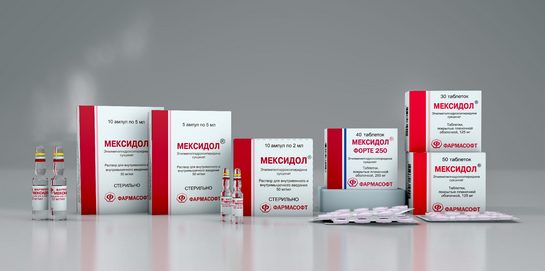
We are talking about the drug Mexidol® (ethylmethylhydroxypyridine succinate). Mexidol's multimodal mechanism of action affects most components of the pathological process in TBI.
It turns out 2,3,11-15:
- Antioxidant action - inhibits free radical oxidation, protects neuronal membranes from destruction
- Antihypoxic effect - improves cellular energy metabolism, activates ATP synthesis in conditions of oxygen deficiency
- Membrane-stabilizing effect - increases the content of phospholipids in membranes, restoring their integrity
- Reduces neuroinflammation by decreasing cytokine and chemokine activity
- Protects neurons from axonal damage and stabilizes neuronal activity
- Has a positive effect on neuro, angio and mitochondriogenesis.
What science says:
For mild TBI and concussion
In a study by M.E. Sergienko involving 34 patients who had suffered mild TBI, the use of Mexidol at a daily dose of 375 mg for 28–30 days demonstrated a positive therapeutic effect, resulting in the correction of asthenovegetative disorders. The authors also emphasized the preference for early administration (within the first 3 days after injury). Post-concussion syndrome, including weakness, headache, memory and attention deficit, irritability, and sleep disturbances, is also a target for therapy2.
In the consequences of TBI and intracranial hypertension
B.M. Doronin and co-authors studied the efficacy of Mexidol in 96 patients with late sequelae of closed head injury. A year-long follow-up study using morphometric methods based on dynamic neuroimaging data showed that long-term Mexidol treatment significantly reduces the severity of intracranial hypertension and can be recommended for the prevention of episodes of increased intracranial pressure in both inpatient and outpatient settings.
In severe combined TBI
In a study by I.B. Savitskaya et al., in patients with severe TBI, the inclusion of Mexidol in the intensive care regimen contributed to earlier weaning from mechanical ventilation and positive dynamics in the level of consciousness according to the Glasgow Consciousness Scale¹⁰.
Long-term risks and prevention
Head trauma can trigger the development of post-traumatic encephalopathy, which can subsequently lead to chronic cerebral ischemia (CCI)—a condition in which blood flow to the brain is disrupted, cognitive impairment increases, and memory and attention are impaired.² Mexidol® also demonstrates its effectiveness here. The MEMO⁵ study, an international, randomized, double-blind, placebo-controlled trial involving 318 patients with CCI⁷, confirmed that sequential Mexidol therapy (parenteral therapy plus oral administration) improves cognitive function (as measured by the MoCA scale)⁶, reduces asthenia and anxiety, and improves quality of life.
Conclusion:
World Head Injury Awareness Day is a good opportunity to remind colleagues and patients:
- Any head injury requires attention
- Delayed consequences can be more serious than the acute period
- Neuroplasticity provides a chance for recovery, but it requires the right conditions
- Modern neuroprotection creates these conditions by interrupting secondary damage cascades
- Early initiation of therapy increases the chances of full recovery
Sources:
- Clinical guidelines "Multiple fractures of the brain and facial skull." ID: 871_1. Association of Neurosurgeons of Russia, Association of Traumatologists and Orthopedists of Russia, Society of Specialists in Maxillofacial Surgery, All-Russian Society of Pediatric Neurosurgery. Approved by the Scientific and Practical Council of the Ministry of Health of the Russian Federation. 2024.
- Sergienko M.E. Clinical experience with the use of Mexidol for the correction of asthenovegetative disorders in patients who suffered mild traumatic brain injury // Road Clinical Hospital, Chelyabinsk. Published on therapy-journal.ru .
- Solovieva Yu ., et al. Treatment of diseases with consequences of traumatic brain injury // Zhurnal Nevrologii i Psikhiatrii imeni SS Korsakova. 2023;(123):126–132. DOI: 10.17116/jnevro202312303126. PMID: 36946393.
- Safety and Efficacy of Sequential Treatment with Mexidol® in Patients with Chronic Cerebral Ischemia (MEMO). International Multicenter Randomized Double-blind Placebo-controlled Study. ICHGCP Clinical Trials Registry (NCT06834490). Updated February 21, 2025.
- Turuspekova S.T., Nurguzhaev E.S., Nurzhanova R.B., et al. Modern aspects of pathogenetic therapy of chronic cerebral ischemia // Journal of Neurology and Psychiatry named after S.S. Korsakov. 2024. No. 12. P. 106-113.
- Zakharov V.V., Ostroumova O.D., Kochetkov A.I., Klepikova M.V., Fedin A.I. International multicenter randomized double-blind placebo-controlled study to evaluate the efficacy and safety of sequential therapy of patients with chronic cerebral ischemia with Mexidol and Mexidol FORTE 250 (MEMO study): results of a subanalysis in patients with arterial hypertension // Therapy Journal.
- Amamchyan A.E., Gafiyatullina G.Sh. Neuroplasticity as the basis of motor rehabilitation // Medical Herald of the South of Russia. 2023. DOI: 10.21886/2219-8075-2023-14-4-78-85.
- Doronin B.M., Doronin V.B., Belousov S.S. Efficiency of Mexidol in the Treatment of Patients with Consequences of Traumatic Brain Injury // S.S. Korsakov Journal of Neurology and Psychiatry. 2009. Vol. 109, No. 5. P. 38-41.
- Savitskaya I.B., Nikonov V.V., Chernov A.V., Pavlenko A.Yu., Beletsky A.V. Efficiency of the drug "Mexidol" in patients with combined traumatic brain injury // Bulletin of Intensive Care. 2012. No. 3.
- General characteristics of the drug Mexidol® film-coated tablets, 125 mg LP No. (000086)-(RG-RU) dated 02/08/2023. General characteristics of the drug Mexidol® FORTE film-coated tablets, 250 mg LP No. (000066)-(RG-RU) dated 11/21/2025. General characteristics of the drug Mexidol® solution for intravenous and intramuscular administration 50 mg/ml LP No. (000107)-(RG-RU) dated 08/14/2025
- Shchulkin A.V. Modern concepts of the antihypoxic and antioxidant effects of Mexidol. S.S. Korsakov Journal of Neurology and Psychiatry. Special issues. 2018; 118 (12 2): 87-93. https://doi.org/10.17116/jnevro201811812287
- Kirova Yu.I., Shakova F.M., Germanova E.L., Romanova G.A., Voronina T.A. The effect of Mexidol on cerebral mitochondriogenesis at a young age and during aging. S.S. Korsakov Journal of Neurology and Psychiatry. 2020; 120(1):55–62. https://doi.org/10.17116/jnevro202012001155
- Gromova O.A., Torshin I.Yu., Stakhovskaya L.V., Pepeliaev E.G., Semenov V.A., Nazarenko A.G. Experience of using Mexidol in neurological practice. S.S. Korsakov Journal of Neurology and Psychiatry. 2018;118(10):97‑ https://doi.org/10.17116/jnevro201811810197
Shchulkin A.V., Chernykh I.V., Abalenikhina Yu.V., Gatsanoga M.V., Andryushina O.A., Kruzhalov N.A., Yakusheva E.N. The effect of Mexidol on the level of neurogenesis markers in acute cerebrovascular accident in an experiment. S.S. Korsakov Journal of Neurology and Psychiatry. 2025; 125(2): 107–112. https://doi.org/10.17116/jnevro2025125021107