
In October 2025, the 17th World Stroke Congress (WSC 2025) , becoming the largest and most significant international forum in this field. More than 4,000 delegates from 100 countries—leading neurologists, neurosurgeons, rehabilitation specialists, researchers, and patient advocates—united under the auspices of the World Stroke Organization (WSO) to define the future of stroke prevention, treatment, and rehabilitation. The data presented on the role of antioxidant therapy was of particular interest.
The congress has become a powerful epicenter of global science and practice. Its primary goal is to share cutting-edge knowledge to reduce the global burden of stroke. The WSC 2025 program was replete with promising data, including results from research on neuroprotection.
During the scientific sessions, theses of Russian research were examined with great attention:
A study of the efficacy of succinate-based therapy in acute ischemic stroke (AIS)1.
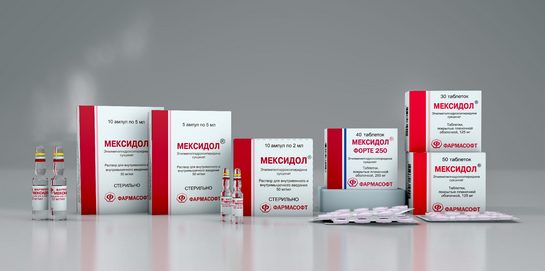
It was demonstrated that in patients with moderate acute ischemic stroke, treatment with ethylmethylhydroxypyridine succinate (Mexidol) was statistically significantly associated with a better clinical outcome compared to the placebo group, as reflected by a reduction in the degree of patient disability. This confirms the importance of incorporating antioxidant therapy into comprehensive patient management regimens to improve recovery.
Study of drug interactions of succinate-based antioxidants with thrombolytic therapy2.
A separate report examined the safety of a combination of the original ethylmethylhydroxypyridine succinate (Mexidol) with the gold standard of treatment—intravenous thrombolysis with alteplase, tenecteplase, and non-immunogenic recombinant staphylokinase. The key finding of the study was that ethylmethylhydroxypyridine succinate (Mexidol) did not affect the pharmacodynamics or thrombolytic activity of alteplase, tenecteplase, and non-immunogenic recombinant staphylokinase, both in animal models and in human studies. This opens the door to the safe combination of neuroprotection and reperfusion therapy.
The congress focused on global cooperation and principles of equality. Participants discussed how to bridge the gap in access to high-tech care between countries, ensure inclusiveness for all patients, and create equal opportunities for specialists worldwide. The data presented will make an important contribution to building an evidence base for comprehensive and safe treatment protocols.
"WSC 2025 in Barcelona demonstrated that our unity is the most powerful tool in the fight against stroke," noted the WSO organizers. "It generates not only ideas but also concrete roadmaps for implementing innovations into everyday clinical practice. Research confirming both the efficacy and safety of combination therapies is critical to optimizing patient care worldwide.".
The central theme of the discussions was the integration of technology and a patient-centered approach. Discussions included the potential of artificial intelligence in diagnostics, telemedicine for remote regions, and the importance of rehabilitation focused on each patient's goals and quality of life.
The 17th World Stroke Congress (WSC 2025) has concluded, but its resonant impact is beginning to spread. The decisions made and the planned collaborations, as well as the scientific data presented, will lay the foundation for real change in healthcare systems worldwide. WSC 2025 will be remembered as the moment when the global neurological community took a decisive step toward a future in which stroke is defeated not only in laboratories but in every clinic, in every country.
Sources:
- Yanishevskiy S. “Succinate-Based Antioxidant Therapy in Acute Ischemic Stroke: A Prospective Multicenter Randomized Double-Blind Placebo-Controlled Parallel Group Trial.” International Journal of Stroke, 2025, Vol. 20(2S), p. 235
- Shchulkin A., & Koltsov Succinate-based antioxidant therapy and intravenous thrombolysis in acute ischemic stroke: Drug interactions study. International Journal of Stroke, 2025, Vol. 20(2S), 150-151.