
Focus on interdisciplinary dialogue.
From March 23 to 25, 2026, the NeuroCare 2026, a leading global platform in neurology and neuroscience, was held in Singapore. It brought together specialists from more than 30 countries, including Russia, China, Japan, the Republic of Korea, India, ASEAN countries, and Europe. The main goal of the international congress was to create an interdisciplinary platform for collaboration between neurophysiology, clinical pharmacology, psychiatry, and neurology to improve the diagnosis, treatment, and neurorehabilitation of patients with nervous system diseases. The event aims to integrate modern neurophysiological methods, pharmacological approaches, and psychiatric expertise within the framework of comprehensive patient management, enabling the development of more personalized and effective treatment strategies for stroke, neurodegenerative and cognitive disorders, as well as comorbid psychoneurological conditions.
Time that waits for no one.
Global neuroscience is undergoing a significant transformation in the treatment of acute cerebrovascular accidents. Reperfusion-based interventions—thrombolysis and thromboextraction—have become the "gold standard" of medical care. However, due to strict time constraints for these procedures, the international community faces a new, important question: how to provide effective care to patients outside the "therapeutic window" and how to maximize the protection of the penumbra—the zone of functionally inactive but viable brain tissue where the structural integrity of neurons and glial cells is preserved. This is why there is currently growing interest worldwide in neuroprotective methods aimed at preserving the penumbra and improving functional and cognitive outcomes in stroke patients.
Neuroprotection: a new vector in the treatment of ischemic stroke.
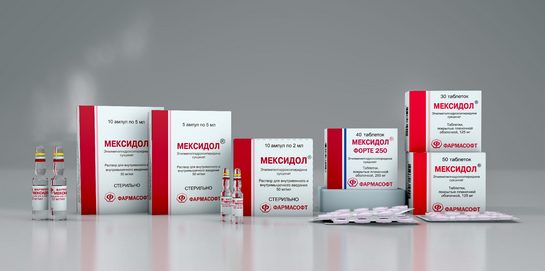
A report by Professor A.V. Shchulkin, MD, focused on the role of neuroprotective and neuromodulatory therapy in the comprehensive recovery of stroke patients. In his presentation, the speaker presented preclinical and clinical data, as well as practical experience with the original drug Mexidol® (ethylmethylhydroxypyridine succinate). Key points included the neuroprotective effect, improved functional outcomes, and reduced disability in stroke patients[3][4][5][6].
Multimodal neuron protection: from experiment to clinical practice.
Mexidol® has a multimodal mechanism of action, combining antioxidant, antihypoxic and membrane-stabilizing effects: the drug protects neurons from oxidative stress, maintains mitochondrial function during hypoxia, reduces neuroinflammation, suppresses apoptosis and stimulates neuroplasticity[2].
Experimental studies on cerebral ischemia models demonstrated a decrease in the volume of the lesion according to micro-CT data and limitation of secondary damage to brain tissue, which confirms the potential of the drug in protecting the penumbra zone[3][6]. The report also presented the results of the double-blind, placebo-controlled study "MIR": long-term sequential therapy with Mexidol® and Mexidol® FORTE 250 in ischemic stroke significantly reduced the degree of neurological deficit and improved the recovery of neurological functions, and also improved the functional outcome and decreased disability[4][5].
NeuroCare 2026: a new vector of therapy – improving quality of life.
The NeuroCare 2026 Congress confirmed the growing global interest in the importance of pharmacological neuroprotection, primarily through multimodal medications. Overall, the event demonstrated that neuroprotection is becoming an important element of a strategy that complements mechanical recanalization and shifts the focus from brain survival to preserving its function and improving patients' quality of life.
Sources:
- https://neurocareconference.com (as of the date of access on April 7, 2026)
- Shchulkin A.V. Modern concepts of the antihypoxic and antioxidant effects of Mexidol. S.S. Korsakov Journal of Neurology and Psychiatry, 12, 2018; Issue 2
- Shchulkin A.V., Chernykh I.V., Abalenikhina Yu.V., Gatsanoga M.V., Andryushina O.A., Kruzhalov N.A., Yakusheva E.N. The effect of Mexidol on the level of neurogenesis markers in acute cerebrovascular accident in an experiment. S.S. Korsakov Journal of Neurology and Psychiatry. 2025;125(2):107-112.
- Shamalov N.A., Fedin A.I., Rakhimbaeva G.S., et al. Results of an international multicenter, randomized, double-blind, placebo-controlled study evaluating the efficacy and safety of sequential therapy with ethylmethylhydroxypyridine succinate in patients in the acute and early recovery periods of ischemic stroke (MIR). Korsakov Journal of Neurology and Psychiatry. Special issues. 2025;125(8-2):40-53.
- Yanishevskiy S. “Succinate-Based Antioxidant Therapy in Acute Ischemic Stroke: A Prospective Multicenter Randomized Double-Blind Placebo-Controlled Parallel Group Trial.” International Journal of Stroke, 2025, Vol. 20(2S), p. 235.
- Shchulkin A. Ethylmethylhydroxypyridine succinate (Mexidol®): mechanisms and clinical evidence in ischemic stroke. In: Mathews Connecting Research: Joint Event on International Conference on Addiction Medicine, Mental Health and Psychiatry & International Conference on Neurology and Neuroscience. Singapore; 2026 Mar 23–25. Abstract book. p. 64–65.