Glaucoma has been called the "thief of sight" since ancient times. Hippocrates described it as "an eye full of water," and in the 18th century, it was dubbed the "silent thief" for its subtle but persistent loss of peripheral vision. During Glaucoma Week, it's important to remember that early diagnosis and modern approaches to neuroprotection are key to preserving vision.
From neurologist to ophthalmologist
The fundus is rightly considered a "mirror of the cerebral vessels." This is why neurologists always refer patients to an ophthalmologist. The condition of the optic disc and retinal vessels often becomes the first marker of a systemic vascular process, long before the appearance of focal neurological symptoms.
From ophthalmologist to neurologist
Today, glaucomatous optic neuropathy is increasingly classified as a neurodegenerative process with a vascular component, sharing pathogenetic mechanisms with cerebrovascular pathology. Ischemia, oxidative stress, and retinal vascular endothelial dysfunction are the same pathogenetic mechanisms that occur in brain neurons during chronic ischemia and vascular cognitive impairment.
"A patient with glaucoma is a patient with potential cerebrovascular risk. Conversely, a patient with arterial hypertension and microangiopathy requires close attention from an ophthalmologist."
Neuroprotection across specialties: evidence base
It's natural that therapeutic strategies proven effective in neurology are also being applied in ophthalmology. In clinical guidelines for the management of patients with glaucoma, neuroprotective therapy occupies an important place as an adjunct to intraocular pressure reduction and control (1,2,3 ). Neuroprotection in glaucoma maximizes the protection of the retina and optic nerve from the damaging effects of mechanical and vascular factors. The use of neuroprotectors helps stabilize visual function and thereby slow the process of neurodegeneration (6 ).
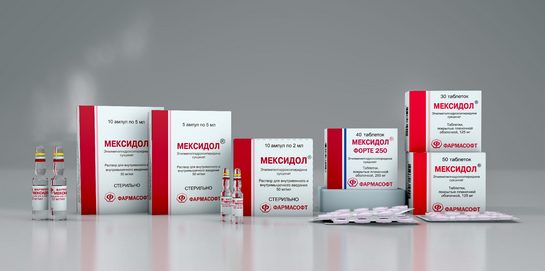
Modern research confirms that Mexidol® (ethylmethylhydroxypyridine succinate) acts on several key links in the pathogenesis of primary open-angle glaucoma, which ensures the preservation of retinal ganglion cells and optic nerve fibers in progressive neuropathy caused by chronic ischemia and hypoxia, and improves the functional activity of the retina and optic nerve5.
This multimodal approach is fully consistent with modern treatment concepts for glaucomatous optic neuropathy. The high efficacy and favorable safety profile of Mexidol in patients with primary open-angle glaucoma are confirmed by clinical trial results 4,5,6,7,8:
Effect on mitochondrial dysfunction
Key aspects of retinal ganglion cell neurodegeneration in glaucoma are associated with mitochondrial dysfunction. A study by Vlasova A.S. and co-authors demonstrated that sequential Mexidol therapy significantly increased the activity of mitochondrial enzymes (succinate dehydrogenase and α-glycerophosphate dehydrogenase), which was accompanied by positive dynamics in retinal structural and functional parameters, as measured by static perimetry and optical coherence tomography7.
Improving retinal sensitivity to light.
A randomized, placebo-controlled study by E.A. Egorov et al., involving 80 patients with stage II-III primary open-angle glaucoma (POAG), demonstrated the efficacy of sequential Mexidol therapy. A statistically significant improvement in the mean deviation (MD) of retinal sensitivity was found at the end of the treatment course in the drug-treated groups, both in advanced and advanced stages of the disease8.
Reducing the risk of progression.
A Kaplan-Meier analysis showed a high probability of glaucoma progression in the placebo group and a statistically significantly lower probability in the Mexidol®-treated groups. The researchers also noted a dose-dependent effect of the drug and its ability to stabilize the number of relative scotomas of the first and second order 8.
Efficiency in early stages.
A study by E.S. Leonova and co-authors confirmed that neuroprotective therapy with Mexidol is most effective in the early stages of the disease (stages I-II), which emphasizes the importance of timely administration of neuroprotection5.
"Mexidol® protects the optic nerve and retina from ischemic and oxidative damage, improves metabolic processes and functional indicators, which increases the patient's quality of life."
This information is intended for healthcare professionals
Sources:
- National Glaucoma Guidelines for Practitioners. 4th Edition, revised and enlarged. / Edited by E. A. Egorov, V. P. Erichev. Moscow: GEOTAR-Media, 2019: 384.
- Primary angle-closure glaucoma. Clinical guidelines of the Russian Ministry of Health https://cr.minzdrav.gov.ru/preview-cr/631_2
- Primary open-angle glaucoma. Clinical guidelines of the Russian Ministry of Health : https://cr.minzdrav.gov.ru/preview-cr/96_2
- Malishevskaya T. N., Filippova Yu. E. Effect of antioxidant therapy on some pathogenetic factors of primary open-angle glaucoma. Bulletin of ophthalmology. 2023; 139(4): 35–43 https://doi.org/10.17116/oftalma202313904135
- Leonova E. S., Polyakova S. V., Pozdnyakova M. A., et al. Experience of neuroprotective therapy of primary open-angle glaucoma based on the use of various forms of Mexidol. Bulletin of Ophthalmology. 2015; 131(6): 91–94.
- Egorov E. A., Davydova N. G., Romanenko I. A., Novikova N. D. Mexidol in the complex treatment of glaucoma // Clinical ophthalmology, Vol. 12, No. 3, 2011, pp. 3–6.
- Vlasova A.S., Malishevskaya T.N., Petrov S.A., Gubin D.G., Petrov S.Yu., Filippova E. The Importance of Mitochondrial Dysfunction in Stabilizing the Glaucomatous Process. Vestn Oftalmola. 2024;140(4):49-58. Russian. doi: 10.17116/oftalma202414004149. PMID: 39254390.
- Egorov E.A., Kuroedov A.V., Gavrilova N.A., Yavorsky A.E., Gornostaeva E.A. Possibilities of antioxidant neuroretinoprotection in the treatment of primary open-angle glaucoma. Bulletin of Ophthalmology. 2025;141(4):49‑59