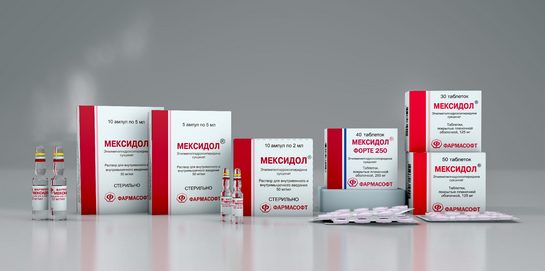

The "Library" - "Evidence Base" section contains the article "Results of a multicenter, double-blind, randomized, placebo-controlled clinical trial to evaluate the efficacy and safety of Mexidol in the treatment of attention deficit hyperactivity disorder in children (MEGA)."
Place of publication:
S.S. KORSAKOV JOURNAL OF NEUROLOGY AND PSYCHIATRY, 2022, Vol. 122, No. 4
Abstract:
Objective of the study. To evaluate the efficacy and safety of two dosage regimens of Mexidol film-coated tablets, 125 mg (OOO NPK PHARMASOFT, Russia), compared with placebo, in children with attention deficit hyperactivity disorder (ADHD) aged 6 to 12 years.
Material and methods. The study was conducted in 14 clinical centers of the Russian Federation as a multicenter, randomized, double-blind, placebo-controlled trial in 3 parallel groups. The study involved 333 children aged 6 to 12 years with a confirmed diagnosis of ADHD, established in accordance with the criteria of ICD-10 and DSM-5. After screening (up to 14 days), patients were randomized into 3 groups in a 1:1:1 ratio: Mexidol 125 mg twice a day, Mexidol 125 mg once a day + placebo, and placebo. The duration of treatment in all groups was 42 days. A total of 332 children completed the study. The dynamics of the condition were assessed using scales for assessing ADHD and comorbid disorders.
Results. Statistically significant changes were obtained in the total score for the inattention and hyperactivity impulsivity subscales of the ADHD assessment scale after 6 weeks of therapy in all three study groups (p
Conclusion. Treatment with Mexidol film-coated tablets, 125 mg twice daily, demonstrated superiority over Mexidol film-coated tablets, 125 mg once daily, plus placebo. Comparable safety profiles were observed for the studied Mexidol and placebo dosing regimens.
Key words: attention deficit hyperactivity disorder, inattention, hyperactivity, impulsivity, children, pharmacotherapy, ethylmethylhydroxypyridine succinate, Mexidol.